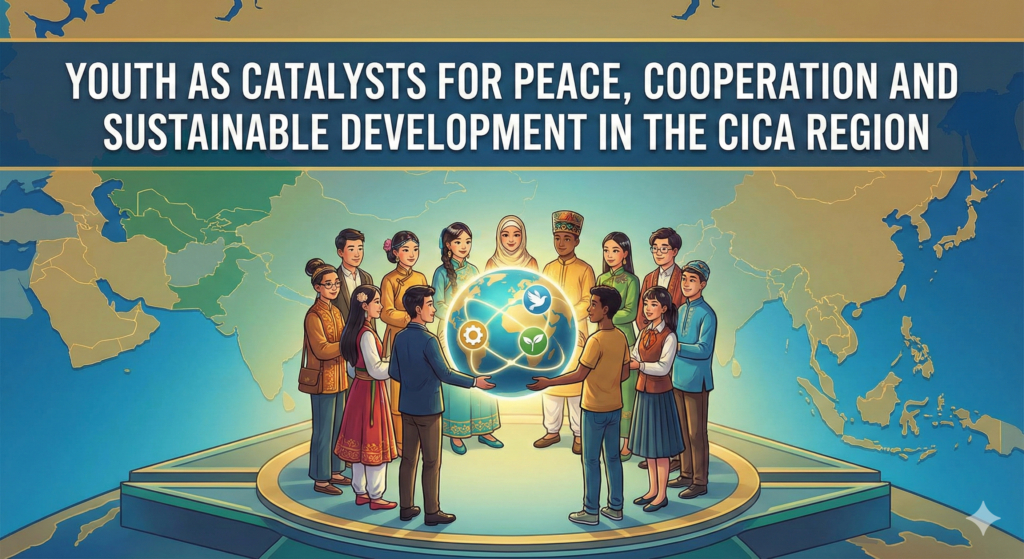
CICA region is important for:
CICA region is important for:
Regional security: CICA plays a crucial role In promoting regional security and stability.
Economic cooperation: CICA promotes economics cooperation and trade among member states.
Cultural exchange: CICA fosters cultural exchange and understanding among member states.
The CICA region is diverse and dynamic area that encompasses a wide range of countries and cultures. CICA play an important role in promoting cooperation, confidence building, and regional security among its member states.
Benefits of youth engagement
Increase civic participation: youth engagement foster sense of civic responsibility and encourage participation in community activities.
Improved decision-making: involving youth in decision making processes leads to more informed and effective decisions.
Enhanced social cohesion: youth engagement helps build bridges between different communities and promotes social cohesion.
Personal development: engaging in meaningful activities helps young people develop important life skills, such as leadership, teamwork and problem solving.
Best practice for youth engagement
Inclusive and participatory approaches: involving youth in decision-making processes and ensuring their voices are heard.
Meaningful activities: providing opportunities for youth to engage in meaningful activities that align with their interests and passions.
Supportive environment: creating supportive environments that foster youth development and well-being.
Partnership and collaborations: building partnerships and collaborations with other organizations and stakeholders to amplify youth engagement efforts.
Youth engagement is essential in today’s era, offering numerous benefits for individuals, communities and societies. By understanding the importance of youth engagement and implementing best practices. we can harness the potential of young people to drive positive change and create a brighter future.
Overview of the CICA region
The conference on interaction and confidence building measures in Asia (CICA) brings together diverse nations across the vast Asian continent, encompassing regions rich in cultural, economic and political variety. This collective platforms aims to foster peace, security and cooperation among its member states. In such a multifaceted environment, one of the most powerful yet underutilized resources is the youth population. Young people constitute a significant demographic across the CICA region often representing more than half of a country’s total population. Their energy, creativity and adaptability can be pivotal in shaping peaceful and prosperous future for Asia.
Importance of youth engagement in Today’s World
In today’s fast changing global landscape, youth are not merely passive recipients of decisions made by the old generations. Instead, they are drivers of social transformation, technological innovations and grassroots peace movements. The engagement of young people is critical for addressing modern challenges such as climate change, violent extremism, unemployment and social inequality. In the CICA region, empowering youth is not just beneficial- it is essential for sustainable development, peace building and regional integration.
Youth-led peace initiatives
Youth-led peace initiatives are reshaping how communities approach conflict resolution. Across CICA member states, young people are leading grassroots campaigns, building online platforms to counter hate speech and organizing local peace dialogues. For example, in South Asia, youth organizations have played an essential role in post-conflict reconciliation efforts, using social media to promote narratives of unity rather than division. These initiatives demonstrate that youth are not just victims of violence but are capable peace builders. Unlike traditional top –down peace strategies, youth-led movements often employ creative, community-based approaches that address the root causes of violence at the grassroots level.
Case studies from CICA member states
In Kazakhstan, youth-driven campaigns like “I am for peace” have successfully united young people from various ethnic groups to promote interethnic harmony. In Turkey, young leaders have engaged in cross-cultural workshops with neighbouring countries to bridge historical divides. Meanwhile, youth in Pakistan and India have pioneered joint cultural and environmental projects that transcend political borders.
These examples prove that when provided the right platforms, young people can become architects of durable peace.
Council of Europe’s youth initiatives
Renewing peace education
A consultative meeting was held to review and renew key contents and approaches to peace education in intercultural youth activities. The meeting brought together 35 experts in peace education and conflict transformation
Peace education and conflict transformation:
A training course was organized for young educators, activist, youth workers and multipliers to design and facilitate peace education and conflict transformation activities.
Youth peace building initiatives in Africa
Central African Republic:
Youth-led civil society organizations play a crucial role in peace building through community mobilization initiatives, capacity-building sessions, and awareness campaigns.
Peace education programs Pakistan :
A study on peace education programs involving Pakistani youth found that these programs can motivate youth to engage in peace building activities and promote social cohesion.
Nigeria:
A study on youth involvement in civil society peace building programs in Jos, Nigeria, found that youth participation in peace building activities can be effective in promoting peaceful relationships between ethnic and religious groups.
Role of youth In preventing violent Extremism
Preventing violent extremism (PVE) requires proactive, youth-centre strategies. Marginalized youth are often the most vulnerable to radicalization due to social exclusion and limited economic opportunities. However, they can also the most powerful agents in building resilience against extremist ideologies.
In the CICA region, youth have actively participated in PVE through educational campaigns, community dialogues and counter-narrative initiatives. Young digital influencers are using platforms like You Tube, TikTok, and Instagram to challenge extremist propaganda and promote pluralistic values. Their unique ability to speak the language of their peers make them indispensable partners in combating the spread of violent ideologies. The role of youth in preventing violent extremism is multifaceted and crucial. Young people can play a significant part in countering extremism ideologies and promoting peace and stability in their communities. Here are some ways youth can contribute:
Youth-led initiatives
Promoting positive values and behaviours: young people can advocate for positive messaging, active participation and good citizenship to counter extremism ideologies.
Condemning violent extremis: youth can directly condemn violent forms and acts of extremism, promoting a culture of peace and tolerance.
Advocating social change: young people can address factors contributing to violence and extremism ideas, promoting social change and community cohesion.
Education and critical thinking
Critical thinking skills: Education can foster critical thinking, enabling young people to question narratives and ideologies that may lead to radicalization.
Tolerance and diversity: promoting tolerance, respect for diversity and meritocracy through education can reduce extremist influence.
Peace-building curricula: initiatives like the UK’s “Educate the Hate” and Kenya’s peace-building curricula demonstrate the effectiveness of education in countering extremism.
Cross-border youth Dialogues
Cross-border youth dialogues are essential for overcoming long-standing hostilities and building mutual understanding. By facilitating exchange between young people from different CICA countries, such dialogues help humanize “the other” and replace stereotypes with empathy.
Cultural exchange, sports and diplomacy
Cultural exchanges and sports diplomacy are powerful tools to bring youth together beyond the confines of political tension. Organizing regional sports tournaments, music festivals and cultural heritage tours can unite young people from diverse backgrounds, allowing them to build trust and friendship. CICA could lead initiatives such as annual youth culture week or inter-Asian sports leagues, where young athletes, artists and student come together to celebrate their shared heritage and aspirations. Such efforts would cultivate a generation that sees cooperation as not just necessary but natural.
Youth networks promoting regional unity
Emerging youth networks are creating platforms for sustained regional cooperation. These networks ranging from climate action alliances to youth entrepreneurship hubs, are driving innovative solutions that cross national borders. Through digital connectivity, youth can now collaborate in real-time, share best practices and jointly advocate for regional policies. formalizing these youth networks under the CICA umbrella could help institutionalize their contributions and ensure that youth voices are systematically included In regional decision-making processes.
Empowering Youth for sustainable Development
Young people across Asia are leading the charge for climate justice and the implementation of the sustainable development Goals (SDGs).youth-led environmental movements, such as free-planting campaigns, river clean-ups and climate strikes are becoming increasingly visible.
In central Asia, youth are mobilizing to combat desertification and promote water conservation in Southeast Asia, young advocates are pushing for renewable energy transitions and sustainable urban development. Their activism is not just about protecting the planet, it is about ensuring their own futures.
Innovation and Entrepreneurship by young people
The CICA region boasts some of the world’s most dynamic youth entrepreneurs ,who are developing start-ups that address social, environmental and economic challenges. These young innovators are creating eco-friendly products, advancing digital health solutions and building platforms that support inclusive education. Investing in youth entrepreneurship can catalyse job creation, reduce poverty and stimulate economic growth, Governments and international organizations should establish innovation funds, mentorship programs and cross-border start-up incubators specifically targeting young entrepreneurs.
Green skills, green jobs: preparing youth for the future
As the global economy shifts towards sustainability, green jobs will play a crucial role in reducing youth unemployment. Preparing young people with the necessary green skills-such as renewable energy technology, sustainable agriculture and circular economy practices- will ensure their competitiveness in future labour markets. CICA member states should prioritize educational reforms that integrate green skills training into both formal curricula and vocational programs, creating a workforce capable of leading the transition to low-carbon economies.
Policy frame work and youth inclusion
While many CICA countries have established national youth policies, the effectiveness and inclusiveness of these frameworks very significantly. Some policies lack adequate funding, while others fail to reflect the real priorities of young people, not just for them and should include mechanisms for regular feedback , monitoring and accountability.
Education and Civic Engagement as tools for Empowerment
Education remains the cornerstone of youth empowerment. In addition to providing academic knowledge, education systems must foster critical thinking, civic responsibility and leadership skills. Integrating civic education, conflict resolution and social entrepreneurship into school curricula can equip young people to become active. Responsible citizen furthermore, supporting youth led civic organizations can strengthen democratic participation and social cohesion across the region.
Highlighting young change makers from CICA countries
Across CICA region, inspiring young change makers are making tangible impacts. In Azerbaijan, youth-led digital platforms are promoting gender equality and human rights education. In Thailand, students group have successfully campaigned for environmental protections in local communities. In the Middle East, young peace builders have fed interfaith dialogues that reduce sectarian tensions.
These stories are powerful reminders of what young people can achieve when empowered sharing such success stories through CICA platforms can inspire and motivate others to take action.
Effective Government and Ngo’s collaborations
Some of the most successful youth initiatives have emerged from strong collaborations between governments and non-governmental organizations (NGO’s). These partnerships provide resources, mentorship and policy support that can help scale youth-led projects.
For example, joint programs in Uzbekistan have provided training for youth entrepreneurs, while collaborations in Sri Lanka have supported post-conflict reconciliation through youth leadership camps. Expanding these models across the CICA region can significantly strengthen youth participation and impact.
Challenges facing youth in CICA region
Unemployment, migration and conflict zones
Youth unemployment remains a major concern , particularly in conflict-affected areas where economic opportunities are scarce. The lack of jobs pushes many young people to migrate sometimes under unsafe conditions or to engage in informal or exploitative work.
In conflict zones, young people often suffer from interrupted education, trauma and limited access to essential services. These conditions can fuels cycle of violence, making it all the more critical to prioritize youth-centred recovery and developmental programs.
Investing in youth leadership and capacity building
CICA countries must invest in developing the leadership capacities of their youth through scholarships, leader-ships academies and mentorship programs. Such investments will not only benefit young individuals but will also contribute to building resilient, forward-thinking societies.