COLONIAL LEGACIES AND AUTHORITARIAN RESTRUCTURING: A STUDY OF SYRIAN SOVEREIGNTY, PEACEBUILDING, AND THE IMPACT OF SANCTIONS BEFORE AND DURING THE ASSAD REGIME.
COLONIAL LEGACIES AND AUTHORITARIAN
RESTRUCTURING: A STUDY OF SYRIAN SOVEREIGNTY,
PEACEBUILDING, AND THE IMPACT OF SANCTIONS
BEFORE AND DURING THE ASSAD REGIME.
Abstract:
This article examines the complex historical, political, and social factors that have shaped Syria’s trajectory, with particular attention to the effects of colonialism, authoritarianism, and sanctions. In the evaluation of the French colonial period (1916-1946) and the subsequent Assad regimes (1966-2024) this research clearly states the complex nature of Syria’s sovereignty, peacebuilding, and economic development. The research discusses the terrible effects of the Syrian Civil War, including humanitarian crises, foreign interventions, and the subsequent collapse of the Assad regime. The study also investigates the post-conflict challenges, including sectarian tensions, economic hardship, and demands for justice and accountability. providing insights into Syria’s sovereignty, peacebuilding, and economic growth. Ultimately, this research aims to contribute to a deeper understanding of the complexities of Syria’s history, politics, and society.
Introduction:
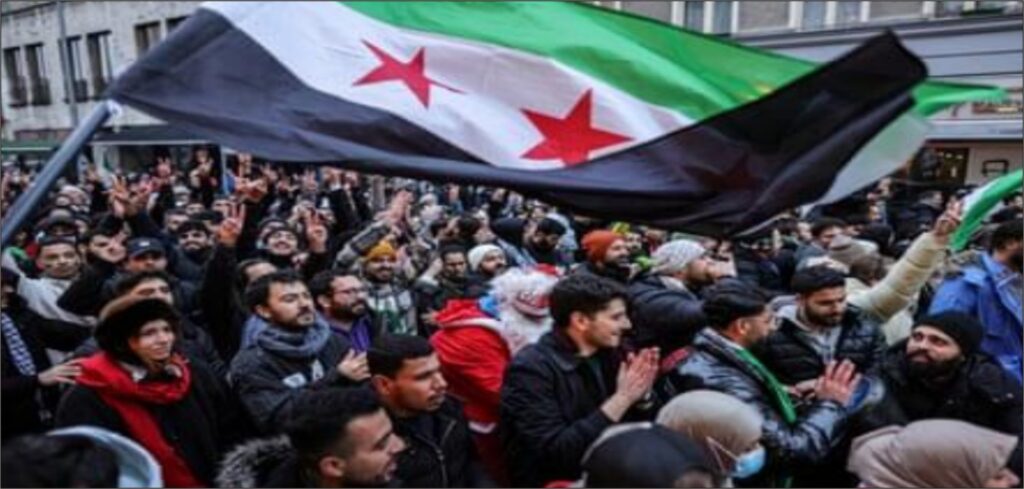
The Syrian Arab Republic, commonly referred to as Syria, is a Western Asian nation situated in the Eastern Mediterranean and the Levant. It shares borders with Turkey to the north, Iraq to the east, Jordan to the south, Israel to the southwest, and Lebanon and the Mediterranean Sea to the west. Damascus serves as the country’s capital and largest city. Syria’s population is predominantly Arab and Muslim, with a notable presence of ethnic and religious minorities, including Kurds, Armenians, Shias, Christians, and Druze. Syria gained independence from French colonial rule in 1946, Syria has undergone significant political transformations, including the control of the Ba’ath Party and the prolonged rule of the Assad family. the Syrian conflict started in 2011 when the government violently cracked down on peaceful protests. The conflict has grown into a prolonged and complex civil war, generating extreme instability in Syria and the broader region with no evident solution due to unpredictable factors like military power, sectarian tensions, foreign interventions, and internal political issues. The causes of the uprising are rooted in decades of authoritarian rule and economic mismanagement under the Assad regime. Since the 1970s, Syria’s economy and politics have been highly controlled, with state institutions serving to reward those loyal to the regime. This led to a corrupt and inefficient bureaucracy, rampant inequality, and restricted economic opportunities for a large portion of the population. Decades of authoritarian rule and economic mismanagement under the Assad regime created deep-seated issues in Syrian society. Although economic reforms were implemented during Bashar al-Assad’s rule in the 2000s, liberalization primarily advantaged a small politically connected elite, worsening social divides. This unbalanced system produced deep resentments among average Syrians, particularly those excluded from political and economic power.
Laiba Farrukh is an education graduate with a Bachelor's degree in Education and a strong academic focus on global affairs, historical influences on modern states, and contemporary socio-political issues. She brings particular expertise in analyzing how evolving political structures and historical legacies continue to shape today's world.
As National Youth Leader at the Institute of International Peace Leaders, she has contributed significantly to writing on social development, peace, and security issues. Her work demonstrates a committed engagement with pressing global challenges and a dedication to fostering understanding of complex international relations dynamics.